- Home
- A/E Specialists
- Services
- Client Projects
- Keystone Associates, LLC – Boys & Girls Club of Binghamton, New York – New Facility
- Fisher Associates – Signal Coordination Study
- Fisher Associates – I-590 and Winton Road Interchange
- Fisher Associates – Centerway Arch Bridge Project
- Traffic Planning and Design, Inc. – Little Neshaminy Creek Bridge Rehabilitation
- Keystone Associates, LLC – Worcester Central School District, Worcester, New York – Addition and Renovation
- McFarland Johnson – Buffalo Niagara International Airport Sustainable Master Plan
- FAQs
- Blog
- Applications
- Contact

Blog
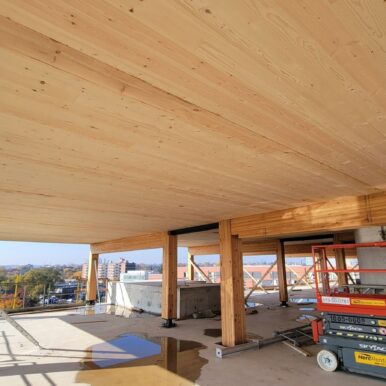
Mass timber is no longer a niche material. The 2021 International Building Code’s Type IV-A, IV-B, and IV-C construction categories opened the door to timber buildings up to [...]
21 Sep 2026
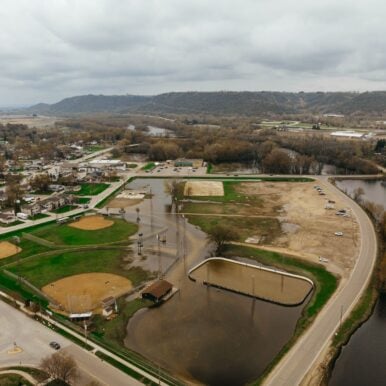
Flood Insurance Rate Maps, or FIRMs, are the regulatory backbone of floodplain design, insurance requirements, and building code compliance nationwide. The trouble is that the proc[...]
07 Sep 2026

Building code compliance review has long been one of the most labor-intensive checkpoints in the design and permitting process. A plan reviewer or design professional has to cross-[...]
24 Aug 2026

A dozer running automatic grade control, a rover shooting layout points, an as-built crew closing out a foundation inspection — all of it traces back to the same thin thread: a sat[...]
03 Aug 2026

Real-Time Kinematic (RTK) GNSS technology is now standard practice on construction sites. Surveyors use it for control layout, grade checking, machine guidance, and as-built verifi[...]
20 Jul 2026

The promise of a digital twin is straightforward: a continuously updated virtual replica of a building that connects design geometry with live operational data, enabling predictive[...]
06 Jul 2026
The rainfall data that engineers have used for decades to size detention basins, design drainage networks, and satisfy permit requirements is being formally revised. For civil engi[...]
22 Jun 2026
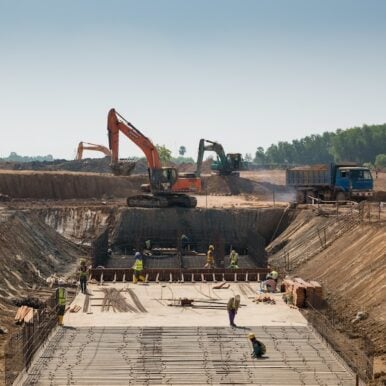
When a contractor submits a pay application for cut-and-fill work, the underlying volume calculation is only as defensible as the survey method that produced it. UAV-based photogra[...]
08 Jun 2026

Mass timber is increasingly deployed in projects that move beyond orthogonal grids and standardized joinery. Freeform roofs, reciprocal frames, and compound-angle node conditions a[...]
18 May 2026

Extreme rainfall is no longer a peripheral design concern. Across much of the United States, short-duration, high-intensity precipitation events are increasing in frequency and mag[...]
04 May 2026
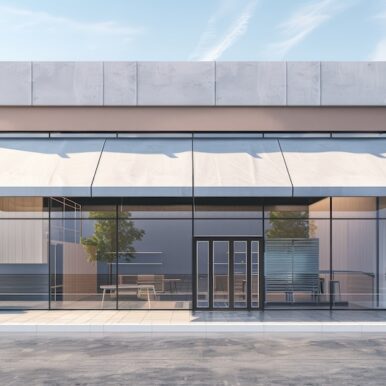
Dynamic shading systems have evolved from manually operated blinds to sensor-driven façade technologies that respond in real time to solar exposure, daylight availability, and inte[...]
20 Apr 2026

Large building projects, healthcare facilities, high-rise residential towers, data centers, airports, and institutional campuses, operate in tightly constrained and constantly evol[...]
06 Apr 2026
Get A Quote
We're more than just brokers. We're A/E specialists, delivering the right coverage and exceptional value and service to hundreds of design firms of all sizes. Of course we leverage the latest industry resources to provide you with coverage, risk management and contract review tailored to your practice. But we also remember the difference between simply billing clients and actually serving them. See for yourself. Contact us of a competitive quote on your professional liability insurance.
© Fenner-Esler Insurance Site Map